How can your child find balance in a busy world?

  • What mindfulness techniques can you teach your child to help them relax and manage stress?
  • How can you support your child in developing emotional balance in their daily life?

Discover our programme:
Mindfulness for Children

Mindfulness for children is the practice of being present and aware of their thoughts and emotions, helping them to better manage their feelings and improve their attention.
Mindfulness for children

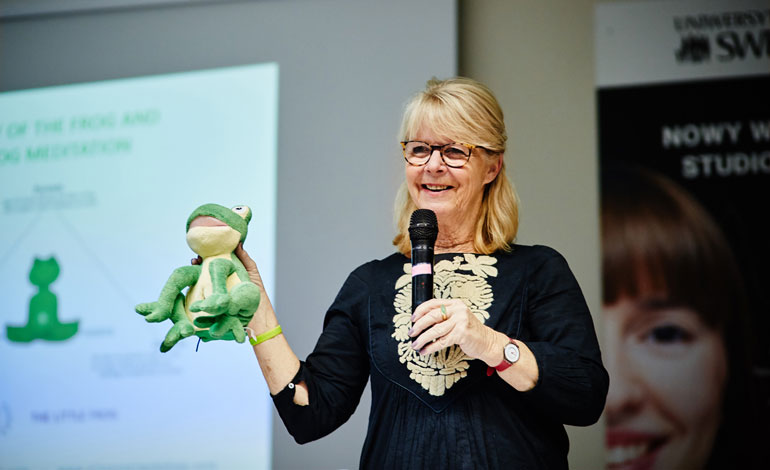
Eline Snel

Founder of the “Mindfulness Works” programme for children and author of the famous book “Quiet and Mindful as a Frog”.


Mindfulness for children 2

Fred Giraud

Certified Programme Facilitator

Mindfulness for children 12

Susan Kaiser Greenland

Creator of the pioneering “Inner Kids” programme, which adapts classic mindfulness and meditation practices for children.

Our mindfulness course for children is based on the innovative methods of Eline Snel and Susan Kaiser Greenland, recognised leaders in teaching mindfulness adapted to young people.

Together, these programmes offer effective tools for children to develop mindfulness, self-awareness and emotional skills, fostering a safe space where they can explore their inner and outer world with curiosity and calm.
Mindfulness for children 13
  • Unique and exclusive programme based on the methods of Eline Snel (Mindfulness Works) and Susan Kaiser (Inner Kids).
MINDFULNESS PARA NIÑOS

Mindfulness Course for Children – Face-to-Face (Valencia)

  • Mindful breathing exercises for calm
  • Guided meditations for greater relaxation and focus
  • Mindfulness stories that foster emotional connection
  • Practices of conscious observation of the environment
  • Gentle movements to integrate mindfulness
  • Attention games for concentration and presence
  • Brief reflections to promote emotional self-awareness


Benefits of mindfulness for children

Mindfulness brings great benefits to children’s emotional and mental development.

¿Did you know it?

Improved concentration

Mindfulness trains children to be present in the moment, which helps them to concentrate better on their daily activities, such as studies, and reduces distractions.

Strengthening emotional management

Mindfulness teaches children to recognise and understand their emotions, giving them tools to manage them in a healthier and calmer way in difficult situations.

Improved sleep

Mindfulness techniques help children to calm their minds and reduce hyperactivity, facilitating a more restful sleep and a better quality of sleep.

Increased self-awareness

Mindfulness helps children become more aware of their thoughts, emotions and actions, enabling them to make more thoughtful and responsible decisions.

Stress and anxiety reduction

Mindfulness practices allow children to relax and better manage stressful situations, reducing anxiety and promoting greater emotional well-being.

Development of empathy and tolerance

Mindfulness fosters children’s ability to put themselves in the place of others, promoting understanding, empathy and greater tolerance of differences.

Building resilience

Mindfulness teaches children to face challenges with a positive mindset, helping them to better adapt to adversity and recover from difficult situations.

Increased creativity

Mindfulness stimulates children’s imagination and curiosity, allowing them to explore new ideas and approaches without the pressure to be perfect.

Improving social skills

Mindfulness promotes effective communication and collaboration among children, helping them to develop healthier relationships and interact with confidence in different social settings.

Questions? Doubts?

Mindfulness for children involves teaching them to be present in the moment, to be aware of their thoughts and emotions, and to respond calmly to stressful situations. It includes practices such as breathing exercises, guided meditations and creative activities that encourage mindfulness and self-reflection.

Benefits include improved concentration, strengthened emotional management, increased empathy, and reduced stress and anxiety. These practices also help children develop resilience and creativity, as well as improve sleep quality.

There is no specific age; children can start practising mindfulness from the age of 3. Activities can be adapted according to the age and abilities of each child, starting with simple exercises and games that encourage mindfulness.

Mindfulness can be taught through fun and accessible activities, such as mindfulness games, short meditations, breathing exercises, and mindfulness stories that help them connect emotionally with their experiences. It is also helpful to involve parents in the process to create a supportive environment.

Numerous resources are available, including books such as “Sitting Still Like a Frog” by Eline Snel and “Mindful Games” by Susan Kaiser Greenland. There are also mobile apps and websites that offer guided meditations, videos and interactive exercises designed for children.

Mindfulness can equip children with tools to manage stress and anxiety, improve their self-awareness and develop empathy for others. These skills can help children respond more healthily to bullying situations and foster a more inclusive and compassionate environment in schools.

Yes, numerous studies have shown that mindfulness practices can have positive effects on children’s emotional well-being, stress reduction and academic performance. Specific research has documented improvements in attention, behaviour and emotional regulation in school settings.

Yes, children can practice mindfulness at home through simple activities and games that encourage mindfulness. Parents can create an environment conducive to the practice by making time each day for breathing exercises, meditation or creative activities.

It is not necessary to spend a lot of time; even a few minutes a day can be beneficial. It is recommended to start with short sessions of 5-10 minutes and gradually increase the duration as children become more comfortable with the practice.